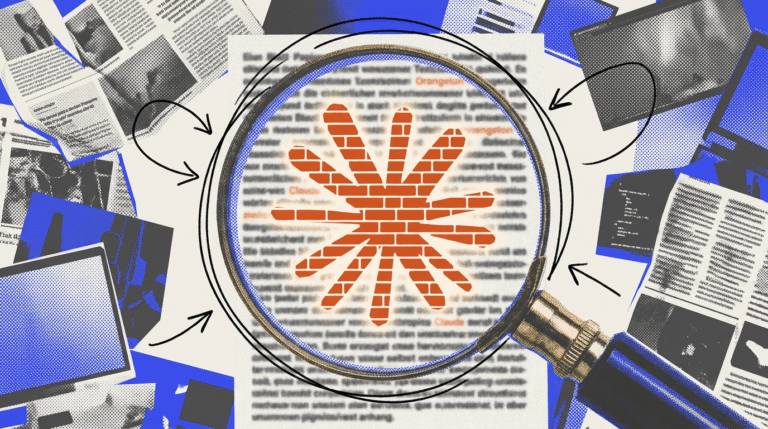
Anthropic is embedding machine-readable labels in all new Claude outputs globally, a move that begins in August 2026.
The company signed the EU AI Act Code of Practice on transparency. This commitment requires the addition of invisible watermarks for text and signed provenance metadata for files. The rule applies worldwide, not just within the European Union.
The rollout schedule
New models launching on or after August 2, 2026, will ship with these labels built in. The requirement covers all Claude products, including the API, Claude Code, Claude Cowork, and Claude Tag.
Anthropic is working to retrofit existing models. A transition period exists under the law, but the company is already preparing the older versions for compliance.
Verification tools for users and third parties are planned, though no release date has been announced. Developers integrating Claude into their own services must determine which Article 50 requirements apply to them.
How the labels work
Text generated by Claude will carry an invisible watermark. The company states this mark does not affect meaning, quality, or readability. It survives copying and pasting and may persist through some editing because it is applied at the model level.
Supported files, including .svg, .png, and .jpg images, will receive signed provenance metadata based on the open C2PA standard. This standard is developed by the Coalition for Content Provenance and Authenticity. The signature indicates that Claude processed the file and can reveal later tampering.
Text watermarks should also function through cloud partners such as AWS, Google Cloud, and Microsoft Foundry. However, those platforms may not support the signed metadata component.
Where the system falls short
Anthropic is upfront about the limitations. A detected watermark does not prove Claude wrote the content. People use the tool for proofreading, translating, or summarising their own text. Consequently, output might carry a watermark even though the ideas came from a human.
The absence of a watermark does not clear things up either. The model might have launched before watermarking rolled out. The text could have been heavily edited or translated. The passage might be too short for reliable detection. Or the metadata got stripped through format conversion or a screenshot.
The real test is how well these marks survive editing, reformatting, and translation. If they hold up, checking for a known watermark should be more reliable than tools like Pangram, whose proprietary detection methods do not reveal what triggered a result. Third-party detectors could add support for Anthropic’s watermark, giving them a more reliable signal.
Industry context and impact
Anthropic is not alone in this effort. Google Deepmind open-sourced its SynthID watermarking system, building it into the Gemini models. SynthID slightly tweaks probability values during token prediction to create a watermark without degrading text quality. It works across languages but struggles with text that has been edited after generation.
OpenAI has held a text detector with 99.9 percent accuracy for about two years and has not released it. Reasons include how easily users can beat it through translation or rewriting, the risk of stigmatising certain groups, and likely worries that a public detector could hurt OpenAI’s own business.
That risk is especially serious in education, where unreliable detectors can lead to false cheating allegations. At the same time, there are good reasons to know when and how much AI was used. Studies show that heavy reliance on AI tools can weaken critical thinking and writing skills, particularly among students who treat them as a shortcut rather than a learning aid. The problem goes beyond academics too, with scammers now enrolling fake students at US colleges and using AI to breeze through coursework and collect financial aid.
Anthropic’s decision could also affect its business. Claude is popular for knowledge work, especially among school and college students, because even older models produce fairly natural prose. With schools and universities already fighting over AI use in academic work, more reliable detection could make Claude less appealing to those users.
What it means
For people making content, the change is mostly about verification rather than creation. You will not see the marks while writing, but you will know they exist. If you paste text into a document or share a file, the label travels with it. This helps editors and platforms verify origin without altering the work. However, heavy editing or converting a file to a different format can still remove the proof. Users relying on these tools to prove authorship should expect false positives and false negatives.