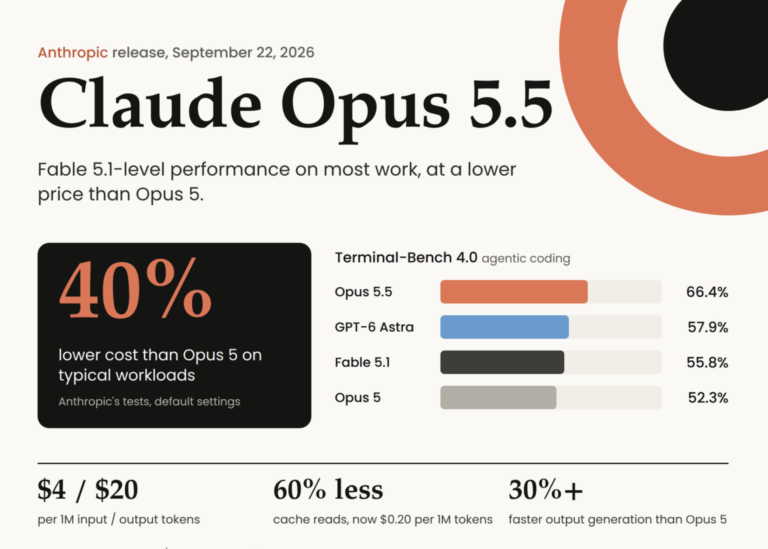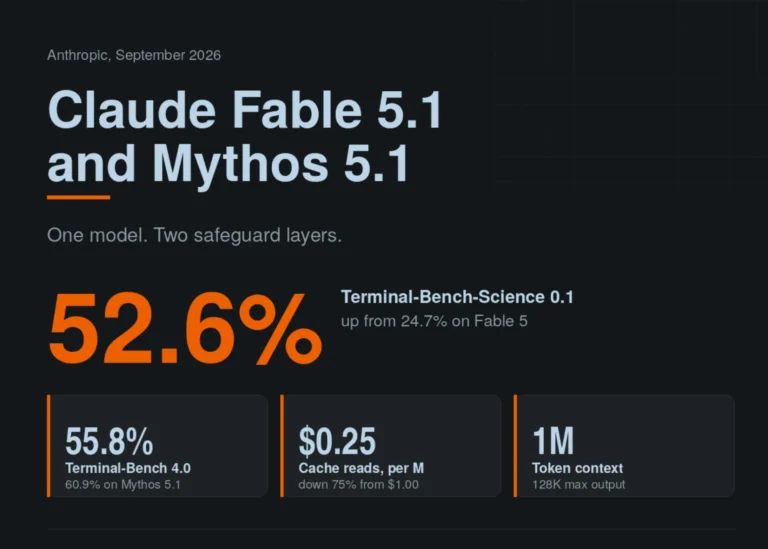
Claude Fable 5 is back online globally on July 1, 2026, following the removal of US export restrictions that had grounded the model since June 12. The shutdown occurred after researchers from Amazon identified a method to bypass its safety filters, prompting the US government to halt access for non-US nationals.
Anthropic had suspended both Fable 5 and the more restricted Claude Mythos 5 to comply with the new directive. While Mythos 5 remains accessible only to specific US organisations, Fable 5 has resumed service for the general public.
The trigger and the fix
The initial block stemmed from a report detailing a prompt injection technique. This method forced the model to identify software vulnerabilities and generate code to exploit them. Anthropic found that the exploit worked across several models, including GPT-5.5 and Kimi K2.7, but the incident highlighted a gap in Fable 5’s defensive layer.
To address this, Anthropic deployed a new safety classifier. This system blocks the specific bypass technique in over 99% of cases. When the classifier intercepts a request, it does not simply refuse it. Instead, the task is routed to Claude Opus 4.8, and the user is notified that the request has been handled by a fallback model.
Researchers from the Department of Commerce’s CAISI reviewed the update. They confirmed the safeguards are strong but noted a trade-off: the system may flag more routine coding and debugging tasks as suspicious. This reflects a design choice to widen the safety margin, ensuring that even borderline cyber-related queries are caught.
Industry response and new standards
The incident exposed a lack of shared standards for measuring the severity of a jailbreak. Anthropic is collaborating with Amazon, Microsoft, Google, and other Glasswing partners to draft a framework. The proposed system scores bypass attempts based on four factors:
- Capability gain: How much the tool extends beyond existing capabilities.
- Breadth of capability gain: The number of distinct offensive tasks enabled.
- Ease of weaponisation: The amount of human effort required to launch an attack.
- Discoverability: How easily the technique can be found or replicated.
Under this draft, Anthropic will apply immediate mitigations to the most severe classes of threats and maintain 24/7 monitoring for new jailbreak submissions.
Performance and pricing
Fable 5 targets long-horizon, agentic workflows. Engineers report success with codebase migrations, such as a project involving a 50-million-line Ruby codebase completed in a single day. The model also excels at financial analysis, vision-to-code tasks, and maintaining focus across long-running agents using file-based memory.
For developers, Fable 5 is included in Pro, Max, Team, and select Enterprise plans through July 7, covering up to 50% of weekly usage limits. After this period, access shifts to usage credits. The model is also available via AWS, Google Cloud, and Microsoft Foundry.
To call the model, developers use the claude-fable-5 string in their API requests. If the safety classifier triggers, the response comes from Opus 4.8, and the existing code path remains unchanged.
Competition in the open weights market
The suspension created an opportunity for rivals. Days after the block, Zhipu AI released GLM-5.2 with open weights. Independent testers currently rank it as the strongest openly available model.
GLM-5.2 uses a Mixture-of-Experts design with roughly 750 billion total parameters, though only about 40 billion activate per token. On Semgrep’s IDOR benchmark, it scored 39% F1, beating Claude Code‘s 32% on the same prompt.
The price gap remains significant. On the AA-Briefcase benchmark, Fable 5 averaged $31 per task, while GLM-5.2 averaged $2.40. However, Fable 5 leads on the AA-Briefcase leaderboard with a score of 1587 Elo, compared to GLM-5.2’s lower ranking on that specific metric.
What it means
For developers, the return of Fable 5 restores access to a model capable of complex, multi-step tasks without the previous uncertainty. The new classifier adds a layer of friction for specific cyber-related queries, meaning some routine debugging or code analysis might be slower or routed to a cheaper model. Users should expect occasional notifications when their requests are handled by the fallback system.