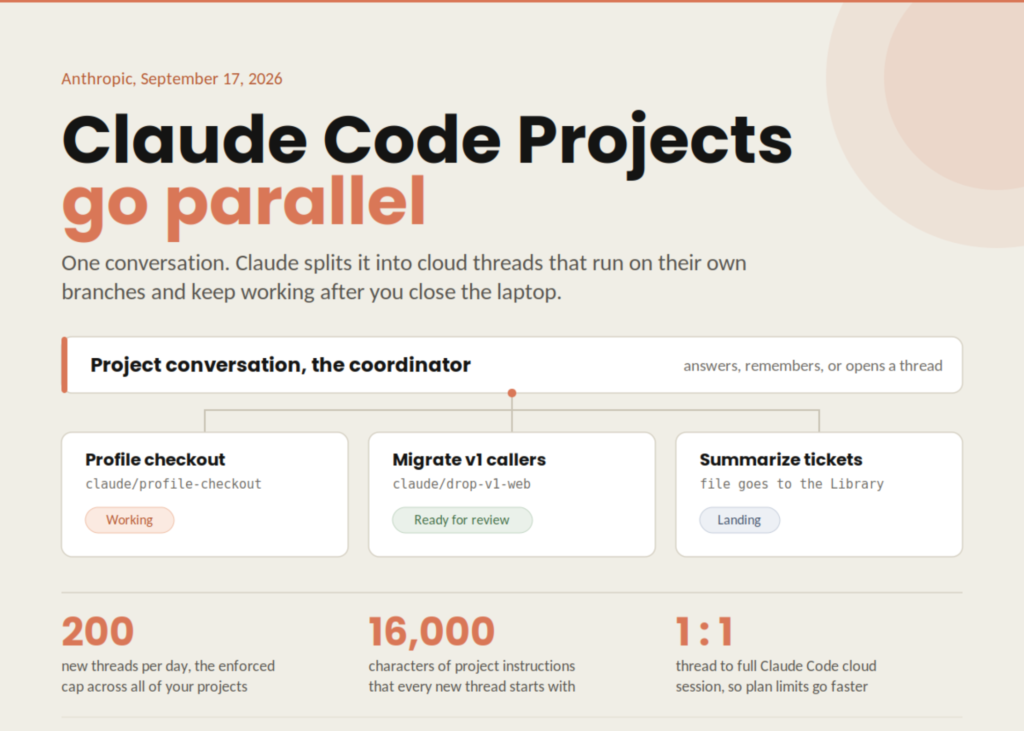
Anthropic has released a beta update for Claude Code that turns projects from simple file folders into persistent cloud sessions. Previously, a project was just a directory containing files and a single chat history. Now, it is a continuous conversation where Claude acts as a coordinator, spawning separate threads for specific tasks. Each thread runs as a full cloud session on its own branch and repository copy, operating in parallel while reporting back to the main chat. These sessions continue running even after you close your laptop, according to the launch post.
Coordinator and threads
The system operates on two distinct layers. The main project conversation handles coordination. It reads your input, answers quick questions immediately, and initiates threads for heavier work. It monitors reports from threads but does not track every individual step they take. The threads are the workers. When a task requires a pull request, the thread opens one and enables auto-fixes. It pushes corrections if continuous integration fails and replies when checks pass.
Threads can delegate further. They split assignments into smaller units using subagents, loops, and workflows. In Anthropic’s example, a user set a goal to reduce checkout p75 latency. Claude then profiled each endpoint, tested optimizations, and opened pull requests in parallel threads. Another example involved retiring a deprecated v1 endpoint across API, web, and mobile repositories. One thread handled each repository, with Claude reporting which pull requests merged first.
If two threads modify the same code, the overlap appears as a standard git merge conflict.
What every thread inherits
Context is set once and available to every new thread. This includes the project’s repositories and uploaded files, plus project instructions of up to 16,000 characters. Project memory, stored in a MEMORY.md index, is also shared. In practice, this might contain notes like the release moving to Friday or instructions on who to consult before touching billing.
Each thread clones every project repository and loads CLAUDE.md, skills, and plugins from them. Permission rules, hooks, and env files behave differently. They apply only from the directory where the thread starts. A single repository project honours these rules, but a multi-repository project does not. MCP tools arrive via connectors on your claude.ai account. The project conversation itself has no connectors, so any connector work must go to a thread.
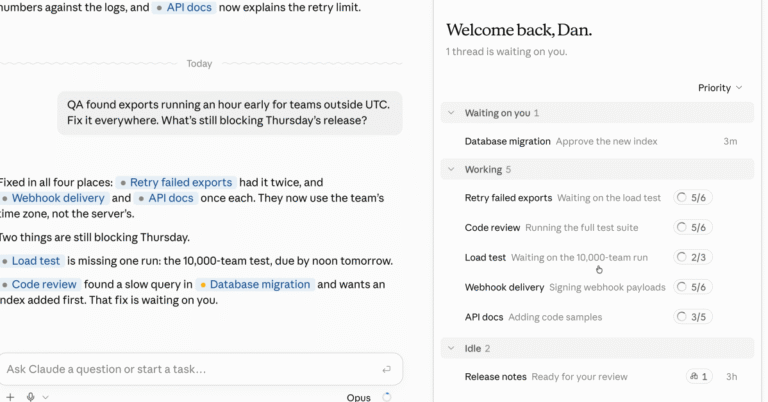
The Overview pane groups threads by state: Ready for review, Waiting on you, Working, Landing, Idle, and Resolved. A Library tab collects uploaded files and files created by the threads.
What it costs
A project consumes plan limits faster than a single session because every running thread counts as a full session. Anthropic exposes a per project Usage tab alongside separate model and effort settings for the coordinator and the threads. A new project runs Opus everywhere, using high effort for threads and low effort for the conversation. Idle threads wake up and spend credits again when CI fails or a review comment arrives. The enforced ceiling is 200 new threads per day across your projects. If a thread hits a usage limit, it waits and resumes automatically.
What it means
Developers can now offload sustained work to the cloud without managing local terminals. A thread persists the state of a build or refactor, allowing you to step away and return to a running process later. The split between a quick conversational layer and dedicated worker threads lets you keep the chat clean while complex jobs run independently in the background.