**What Happened:**
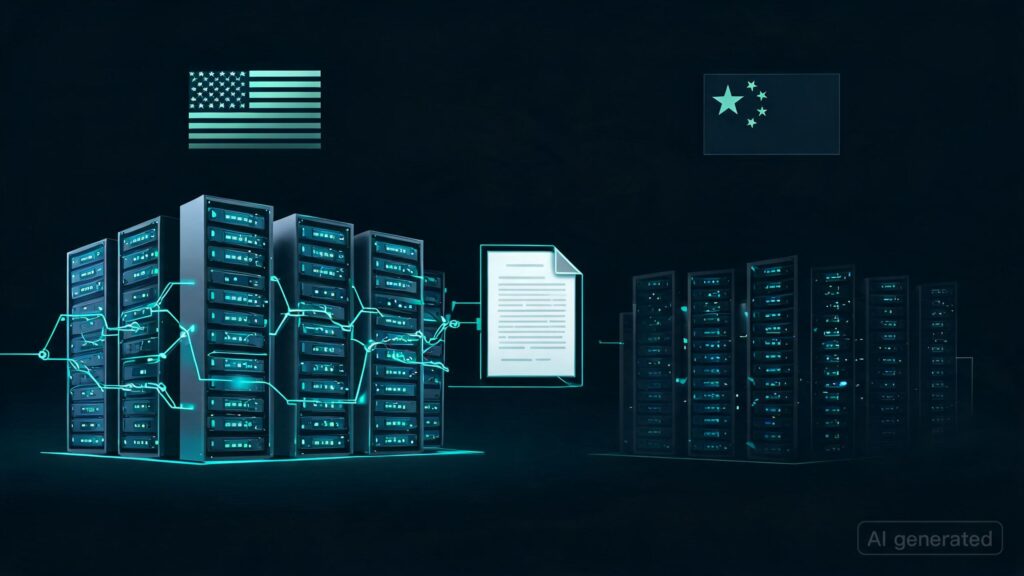
Anthropic recently published a research paper outlining two potential futures for global AI leadership by 2028. The core argument is that the US currently leads China in frontier AI due to superior computing resources, primarily from American and allied companies’ technology. However, China has maintained parity through two workarounds-chip smuggling and overseas data center access-and a technique called “distillation attacks.” This latter method involves creating fake accounts on US AI platforms to harvest model outputs for training their own models.
**Why It Matters:**
The paper shifts the focus from traditional safety concerns like AGI (Artificial General Intelligence) to geopolitical dynamics. Anthropic argues that the compute gap, while significant, is not insurmountable; they point out that China has already achieved near-parity with US AI capabilities. They foresee two possible scenarios for 2028: one where the US tightens export controls and maintains its lead, or another where China closes the gap and influences global norms.
**Takeaways:**
– **Compute Gap vs. Algorithmic Innovation:** Anthropic highlights that algorithmic innovation could potentially bridge the compute gap faster than expected.
– **Need for Policy Action:** The paper underscores the importance of robust policy measures to prevent a power shift favoring authoritarian regimes, particularly in areas like AI governance and export controls.
– **Multi-Layered Threat Analysis:** This research integrates multiple layers of threat analysis (compute, data access, algorithmic exploitation) providing a comprehensive view of future risks.