For creators and makers, the message is clear: the market is ready to pay for artificial intelligence, provided the business models are sound. Alphabet’s recent capital raise confirms that institutional appetite for AI is not just a bubble, but a voracious demand.
A record-breaking signal from the stock market
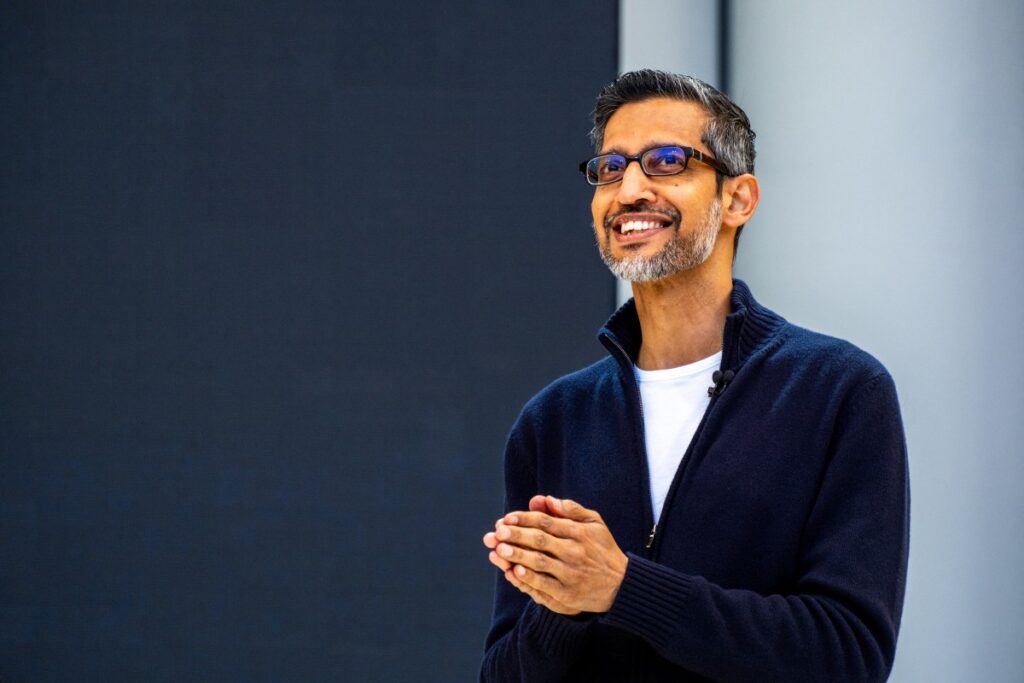
Google’s parent company, Alphabet, successfully raised a staggering $85 billion through a stock sale. The initial plan was to sell a first tranche of $40 billion, comprising two share classes and smaller depositary shares designed for broader access. However, the offering was so oversubscribed that it ultimately brought in $45 billion, according to CEO Sundar Pichai in a post on X on Monday. Notable buyers included Berkshire Hathaway, a firm historically associated with value investing, which acquired $10 billion worth of shares.
Alphabet intends to sell another $40 billion in the next quarter, bringing the total to $85 billion. Even a figure of $80 billion would have shattered the previous record for equity offerings, which was set by Brazilian oil producer Petroleo Brasileiro SA when it raised $70 billion in 2010, reports Bloomberg.
Why this matters for the wider AI sector
While it is true that investors are buying shares of a mature, healthy entity rather than a debt-ridden startup, the implications extend far beyond Alphabet’s balance sheet. The company reported $110 billion in revenue in the first quarter alone, with high profit margins and a 22% year-over-year increase. Yet, Pichai has explicitly earmarked the proceeds for artificial intelligence.
“Part of our multi-year investment strategy to meet the AI opportunity ahead and support the demand we’re seeing from enterprises and consumers,” Pichai stated. He also noted at Google I/O last month that the company expects to spend between $180 billion and $190 billion on capital expenditures before the year ends, primarily on AI infrastructure and data centers.
This timing is critical for the broader industry. As Anthropic prepares for an initial public offering, this successful sale serves as a strong indicator for the wider AI IPO pipeline. It suggests that public investors, particularly deep-pocketed institutions, are willing to commit significant capital. The upcoming SpaceX IPO is expected to break records for cash raised and valuation, while Anthropic’s deal could potentially surpass it. OpenAI is also waiting in the wings.
However, this optimism hinges on public investors maintaining their appetite, not just private venture capitalists. An unprecedented nearly $8 trillion in AI spending has been committed over the next five years. That capital must come from somewhere, including company revenues, loans, and stock sales. Whether public markets have the stomach to absorb that volume for that duration remains the critical question for every AI company eyeing an IPO.
Key takeaways
- Alphabet’s $85 billion raise, driven by oversubscription, signals robust institutional demand for AI-related assets.
- With nearly $8 trillion in AI spending committed over the next five years, public markets must sustain this appetite to fund the sector’s growth.
- Upcoming IPOs from Anthropic and SpaceX are expected to set new benchmarks, potentially surpassing previous records for valuation and cash raised.
- While Alphabet is a financially stable entity, the broader market’s ability to fund AI infrastructure and data centers remains the key variable for the industry.