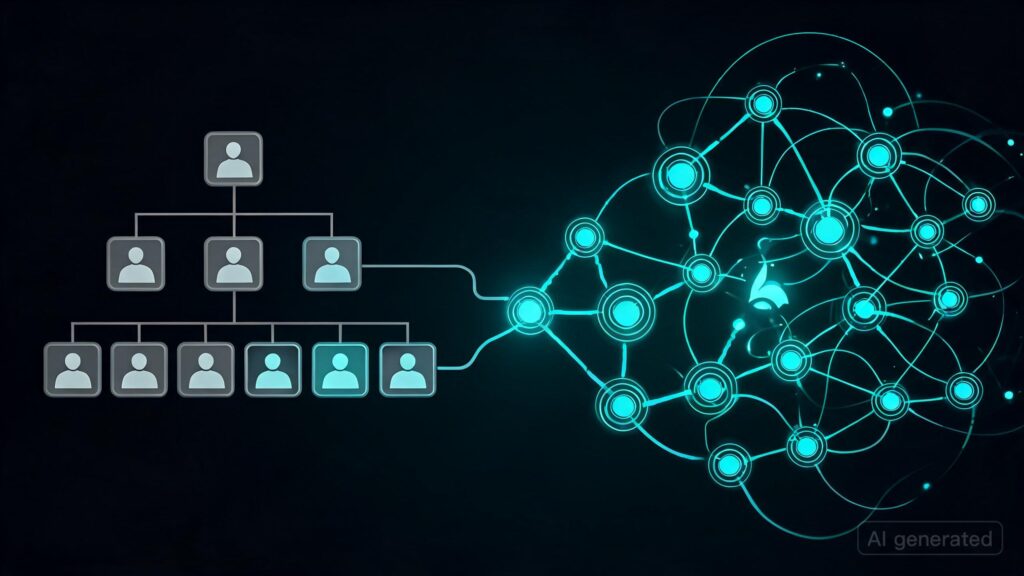
AI May Reshape Institutions More Than It Replaces Jobs
I believe that the next big AI debate won’t be about intelligence.
Instead, it will focus on how reality is represented and understood by systems.
Currently, most discussions around AI center around which models or agents are superior in terms of performance metrics like speed and accuracy.
However, institutions fail not just because they lack intelligence, but because their internal representations of the world-how data is collected and entities are identified-are often incomplete or inaccurate.
A financial institution might have numerous dashboards yet struggle to accurately assess customer risk. A government agency may amass vast amounts of data but still miss critical insights into citizens’ experiences.
In such scenarios, a company with sophisticated AI assistants can operate on fragmented assumptions and outdated work processes, leading to ineffective decision-making even when the underlying technology is advanced.
Three Layers of AI Architecture
- SENSE: How reality is captured and represented. What signals are collected? Which entities matter? How is state tracked over time?
- CORE: How systems reason, optimize, and make decisions.
- DRIVER: Who authorizes actions? Accountability mechanisms. Can actions be reversed? What happens when the system makes a mistake?
A common observation is that many AI systems are excelling in CORE (the decision-making layer) while still struggling with SENSE and DRIVER (representation and action execution).
This creates an intriguing scenario where highly intelligent systems operate on incomplete representations of reality, leading to unclear accountability structures.
For example, a system might be extremely effective at making decisions based on available data but fail to provide clear guidance on what actions should be taken or how mistakes should be handled.
Key Takeaways
- The future of AI systems may hinge more on their ability to represent reality accurately and act responsibly rather than simply being smarter.
- Institutions need to ensure that they have robust mechanisms for sensing the world (SENSE) and ensuring that decisions are legitimate (DRIVER).
- This shift could lead to a reevaluation of how AI is integrated into institutional structures, potentially requiring significant changes in governance and accountability frameworks.
What do you think about this perspective? Is it valid to focus on the representational aspects of AI rather than just its computational capabilities?