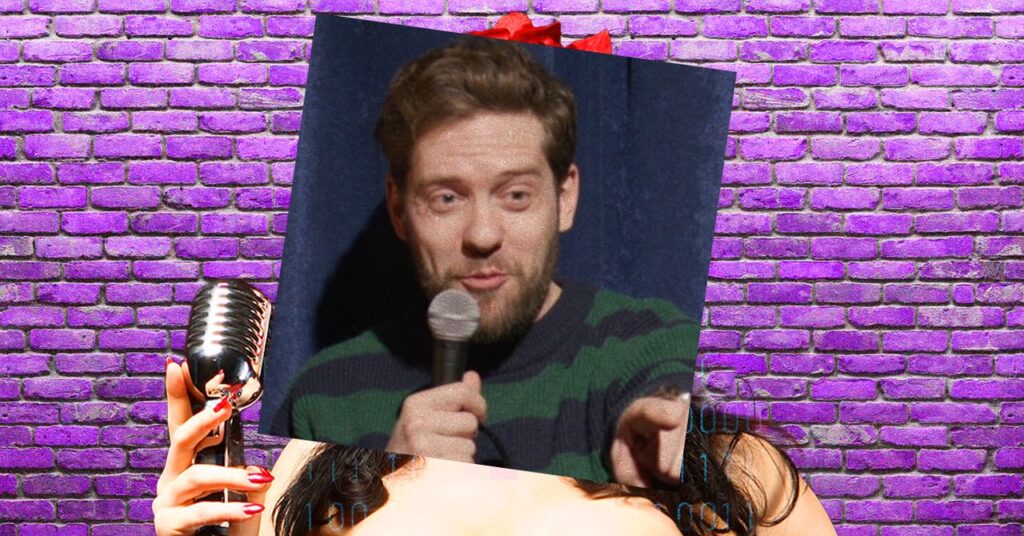
Last week, stand-up comedian Julia Jasunas received a direct message from a fellow comic informing her that an Instagram influencer had stolen one of her jokes. Jasunas clicked the link to find a video of a blonde woman named Aylen Skye, who told the story verbatim, down to the filler words. The influencer claimed to rent out a room in her apartment to a cute guy, a setup Jasunas had used in her own act.
Skye, who has 250,000 followers, wore a crop top and Daisy Dukes while delivering the line. The website she promoted, AylenTV.com, redirected to Fanvue, a subscription service that describes itself as a platform for AI monetisation. After checking the comments section, Jasunas concluded the account was fake. Genuine female comics typically receive messages objectifying their bodies or questioning their humour. Skye’s feed contained only positive feedback.
For Jasunas, the theft felt violating on multiple levels. Her work was being funnelled into sexualised content for someone else’s profit. She reported the video to Meta for impersonation, but the platform stated it did not breach community guidelines because Skye was not pretending to be Jasunas. Meta did not seem to care. Most of Skye’s posts are now flagged as AI content, though the account remains active.
The pattern of theft
Jasunas is not the only comedian targeted. WIRED has identified eight others whose clips were replicated by scantily clad AI-generated women. These accounts often follow one another. The stolen videos are copies of successful viral stand-up clips, but the AI versions feature better lighting, improved audio, and tighter outfits designed to ensure virality. The accounts also post flirty, AI-generated interviews with hosts like Conan O’Brien and Jimmy Kimmel. Occasionally, they include racist or transphobic jokes aimed at a specific political demographic.
Instagram’s rules prohibit impersonation but do not cover copying content that is not copyrighted. The platform also lacks prohibitions against AI content provided it is labelled. Some accounts carry such labels, but others do not, or the labelling is inconsistent. Skye did not respond to requests for comment but once wrote on a comic’s post: “if you focused on putting out content instead of making whinny posts like this, you’d be as successful as me.”
Many comics find it particularly grating when the AI versions perform better than the originals. This has sparked calls for stronger protections for original material. Mandy Martino, whose joke was also lifted, told WIRED: “AI is evolving very fast, and we need rules to protect creators before this becomes a bigger issue. It’s not just about a joke being stolen—it’s about this being a change that we need to get ahead of. And Instagram saying this isn’t a problem is the scariest part.”
How the technology has changed
Complaints began appearing in June, with stand-up Steph Clark regularly documenting what she called “weird pick-me AI slop”. An early example showed a leggy redhead delivering a nonsensical punch line comparing faking orgasms to being a bad cook. The expression on the face was vacant.
Over the following months, the technology improved exponentially. It is now difficult to tell if the women in the videos are real people. Tiffany Sloane identifies as an actress in its bio and has more than 375,000 followers. The account describes a 19-year-old with a septum piercing and a BBL who jokes about quarter-zips and Jimmy Buffett songs. Like Skye, the page includes a link to an OnlyFans profile.
Sloane built a large following across Instagram, TikTok and Facebook since starting in August. Ryan Broderick described the operation as a “super horny AI-generated short-form video content farm”. On 3 October, comedian George Brett Olson posted a viral video captioned “AI stole my joke!!!” showing a side-by-side comparison. His stand-up bit about Republicans ignoring AI risks in favour of manufacturing panic over illegal immigration appeared next to Sloane’s near-identical version. Both clips featured the comedian standing in front of identical backdrops wearing similar salmon shirts and khaki shorts. The only difference was the punch line, which included an expletive in Olson’s version.
Olson told WIRED he was in shock to see people openly stealing in real time. His followers reported the video to Meta, which responded that it did not violate community guidelines. “I couldn’t believe it,” Olson said. “This is my intellectual property. I created it. And not only did this person or whatever steal it, they stole my likeness too.”
After Olson posted his response, he was flooded with support from fellow stand-ups and fans. Sloane commented on Olson’s page saying “sorry, won’t happen again” before deleting the video and many other Reels on its page. Sloane did not immediately respond to requests for comment.
Despite the public outcry, Olson remained dispirited by Meta’s inaction. After tagging Instagram head Adam Mosseri, Mosseri replied that he did not think it was “practical for us to try and ban AI content”. He added that the platform was “very invested in trying to drive more traffic to original content creators, and if an AI creator is ripping off content wholesale, it would be good for us to work out what we can do about that.”
Francis Brennan, a spokesperson for Meta, declined to comment further, stating: “Our policies are pretty clear around this stuff, and Adam’s comment speaks for itself.” All the AI-generated accounts flagged by WIRED remain on the platform.
Legal and financial hurdles
Comedians currently have very little recourse against AI creators “ripping off content wholesale”. Legally, jokes have historically enjoyed minimal copyright protection. This is partly due to the ephemeral nature of stand-up and the fact that setups and punch lines have been used with slight variations for years. Financial stakes are also relatively low. Aaron Perzanowski, a law professor at the University of Michigan, told NPR in 2017 that litigation is rare for low-dollar-value creative work.
Olson noted that an intellectual property lawyer he consulted echoed this sentiment. Unless Sloane was making millions on OnlyFans, threatening a lawsuit was probably more trouble than it was worth.
The negative sentiment does not appear to be shared by some in the tech industry. Andreessen Horowitz partner Justine Moore publicly praised Sloane on X, calling her online presence a “genius marketing hack”.
Olson is not overly optimistic that AI evangelists will defend the creatives whose labour is being exploited. Nor does he believe the “lizard-brained” commenters posting horny remarks on Sloane’s and Skye’s pages care whether the women are real or who crafted the jokes.
“To me, we’re asking the essential question, does the artist matter?” he said. “And to those 350,000 people that follow Tiffany Sloane, the answer is clearly no. And that’s really demoralizing.”
What it means
For people making content, the immediate change is a loss of control over how their work is presented. A joke stolen for a stand-up set can be repurposed for a sexually explicit video without consent. The platforms hosting this content are not removing the material, leaving creators with few options other than public shaming, which often yields little result.