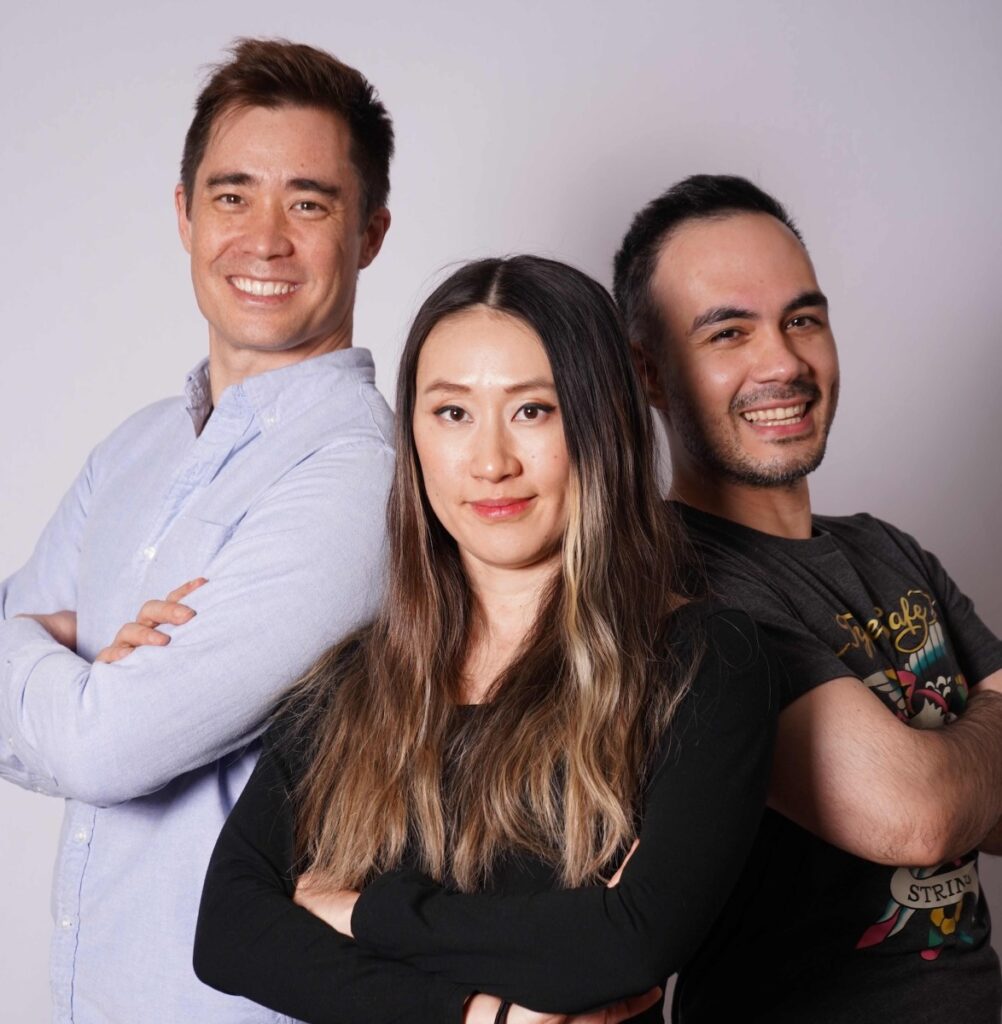
Diogo Almeida, the researcher who helped build ChatGPT and invented reinforcement learning from human feedback, says the technology is not useful for automation because computers speak a different language than humans.
Two years ago, he left OpenAI to found TypeSafe AI. The company released a new model, Jev, which is not a large language model. It does not output text. Instead, it produces probabilities, or what TypeSafe calls calibrated decisions.
How it works
By avoiding language, the model becomes cheap and fast. Users define outputs in advance, so the system cannot hallucinate. Output tokens are free, while input tokens are metered by the billion rather than the million.
Developers have shown strong interest. TypeSafe briefly lost the ability to serve users via its API because demand was so high. The tool appears most useful for software automation. Developers see it as a cheaper way to put intelligence into their code.
Real world results
Pranit Sharma, a software engineer at Vercel, used OpenAI’s ChatGPT Luna 5.6 to run a classifier that reviewed commands for safety. When Vercel replaced Luna with Jev, the results came 5 to 18 times more quickly with greater accuracy.
Nikhil Mudholkar, CTO of Bryo AI, tested Jev against Gemini for classifying business emails. In his test, Gemini was slightly more accurate but 10 to 20 times more expensive. Mudholkar noted that Jev provided confidence scores.
“It is the only one that hands back a real probability which makes it ideal for automating workflows!!” Mudholkar said.
Checking other models
The new model can also augment existing large language models by acting as a check on misbehaviour. Using agents to monitor agents can become expensive, but Almeida argues using Jev makes sense. He sees users deploying it to track LLM agent traces and prevent jailbreaks.
Armin Ronacher, CTO of Earendil, which builds the open-source model Pi, explained that this approach delegates the hallucination problem to the user.
“The user has to say, okay, if this only comes back with 50% probability, maybe this is a coin toss, and I disregard it. But if it’s 95%, sure, then I can do something with it,” Ronacher said.
Ronacher also sees potential for model routing. Predicting whether a workload requires a specific model would be useful, but using an LLM for the job would be expensive. Jev’s low cost and speed make that kind of real-time sorting possible.
The goal
The model is named after William Stanley Jevons, the 19th-century economist whose eponymous paradox describes how the falling cost of a commodity can lead to it being used more and more. Almeida hopes the falling cost of intelligence will lead to widespread deployment.
“We think that there’s just going to be smart software all over the place in a way that’s emergent and distributed … much more like the early internet than you know like the the mega apps that people are trying to build right now,” Almeida said.
TypeSafe will build more versions of the model in new modalities. Almeida said the main product of frontier labs is fear or hype, whereas TypeSafe wants its main product to be intelligence.
He added that the company is not a lab in the sense of betting on infinite wealth or building God in a data center.
Almeida is tight-lipped about the model’s architecture, which outside observers suspect is built on top of an open-weight LLM. The company refers to Jev as a System One model, focused on intuition rather than reasoning.
Almeida says Jev is trained exclusively on synthetic data using a technique he calls reinforcement learning from calibrated decisions. He told TechCrunch that making all of their data was one of the best bets he has ever made, better than the launch or RLHF.
Half of the company is a lab that owns this entire subfield of statistically well-understood synthetic data, which Almeida calls his life joy.
For now, Jev stands alone as this kind of model. Ronacher expects competitors will spring up now that its utility is apparent.
“We should have seen this earlier in many ways, but presumably because the LLMs are so cheap and subsidized, you often don’t have to be creative yet,” he said.