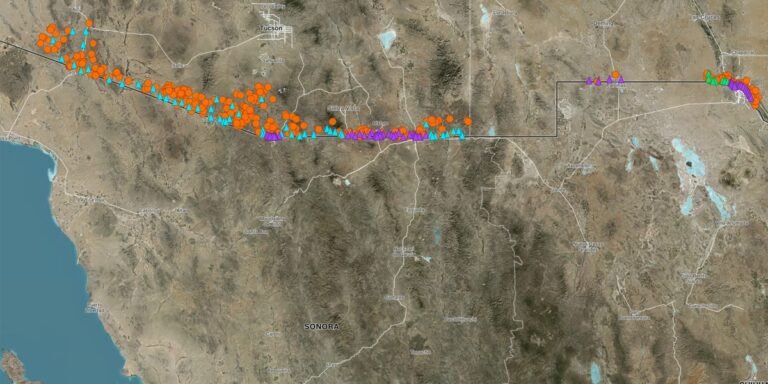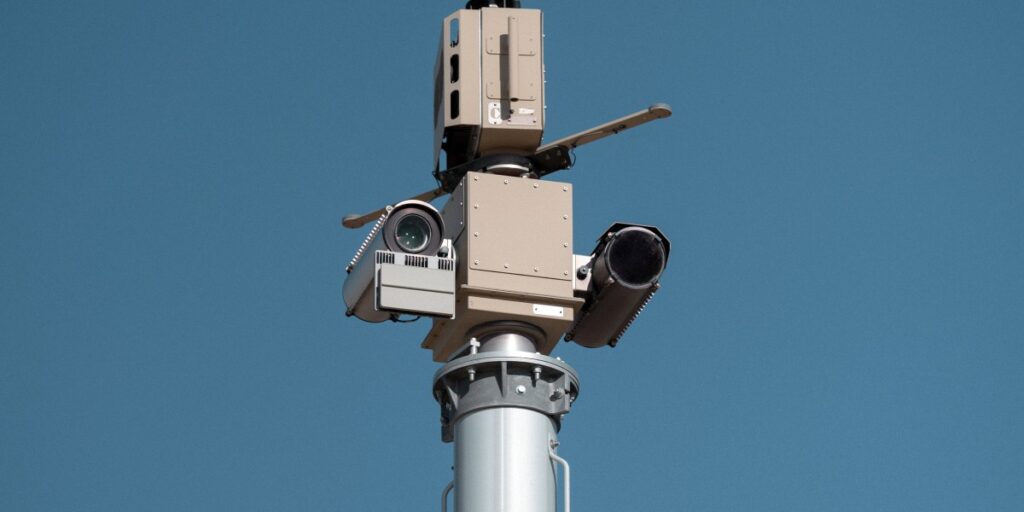
MIT Technology Review has published an investigation revealing that people have walked through areas monitored by advanced AI towers near the US-Mexico border and died nearby, with their bodies remaining unnoticed for weeks or months. These cases highlight systemic failures involving broken towers, algorithms that missed people, and agents who ignored alerts. The story is part of a collaboration between MIT Technology Review and Times of San Diego called Dying on Camera, where journalists spent the past year examining the failures of border surveillance technology.
Each death should have raised alarms inside US Customs and Border Protection (CBP) regarding flaws in its surveillance network. This is especially true for cases near the latest towers built by the defense company Anduril. The US plans to spend $1 billion to triple the size of the virtual wall by 2034.
Four recommendations for CBP
1. Conduct a comprehensive audit of deaths near the virtual wall
New Mexico state representative Sarah Silva said, “If I were the federal government, I would do an audit, because this feels like it’s not working,” after MIT Technology Review showed her that more than 18 people died near surveillance towers in a small stretch of desert near her district in 2024 alone.
An audit is necessary because, despite reviewing thousands of pages of police reports and other documents, knowledge of the total number of towers and their locations remains limited. CBP does not publish a comprehensive map of its virtual wall. Researchers relied on mapping work led by the nonprofit Electronic Frontier Foundation and satellite imagery to verify where specific towers were and when they were installed.
The analysis covered nearly 600 towers. This number is far less than the 800 the government says operate today. Estimates of installation dates are inexact. Consequently, the tally of more than 1,050 people who have died near them is an undercount. The picture of where along the border the problem is worst is incomplete.
An internal audit would not have such limitations. In theory, CBP tracks when each tower went up and when it was active. It has had the ability to audit their effectiveness—while quantifying how many people have died near them—since at least 2015. Sources indicated the agency has never done such an audit. The need for one is now more urgent.
2. Fix the way the agency tracks migrant deaths and remains
If CBP is to analyse instances where people have died near its surveillance technology, it needs to know when and where those deaths happen. The current system for tracking that data is beyond broken.
There is no national agency that collects and publishes all available records on migrant deaths. Researchers sifted through thousands of pages of records from dozens of agencies in Texas alone, but the picture remains incomplete owing to the lack of a shared protocol for documenting these deaths in public records.
Border Patrol has had its own internal system, called the Border Safety Initiative Tracking System (BSITS), in place since 2007. National rules for how different sectors should enter cases into the system were not established until 2021. The next year, the Government Accountability Office (GAO) found that many cases still were not being tracked in this system, especially deaths that were not discovered by Border Patrol. In 2023, the GAO reported that Border Patrol had taken steps to fix that, but outside researchers consistently find the agency’s estimates to be undercounts even today.
In addition to tracking migrant deaths, CBP launched a program in 2017 to prevent them, called the Missing Migrant Program. In April 2025, the GAO found the program was improving the way it collected and tracked data about events like 911 calls and rescues. The problem, it said, was that there was no plan in place to use the data to measure whether the program was actually increasing rescues or reducing deaths, which are its primary goals. It made two recommendations for solutions, neither of which has been implemented.
3. Track cases when surveillance technology leads to an apprehension
In 2014, when the virtual wall was much smaller, the GAO suggested that Border Patrol agents log when a piece of technology helped them apprehend someone trying to enter the US illegally. It would take agents some extra time, but logging these assists would help Congress understand how often various surveillance technologies were leading to actual apprehensions. Once this data was collected, the GAO added, the agency should measure whether its surveillance technologies were working. CBP agreed, and it started requiring agents to enter such information.
Then, in 2017, the GAO reported that the data being collected was inaccurate and unreliable. It found agents in Texas, for example, who were crediting a specific type of tower in apprehensions hundreds of times, even though no such towers existed anywhere in the state. Border Patrol said it would improve; it agreed to train agents on the importance of collecting such information.
But years later, agents told researchers it was still not a priority. One former CBP official described the mandate as “spitting in the wind, to be honest,” and said the messy reality of apprehensions does not translate into neat metrics. The official, who requested anonymity, served during the Biden administration and was not authorised to discuss sensitive issues.
And in August 2021, more than seven years after it agreed to do so, CBP still had not produced any analysis on the towers’ effectiveness, the GAO notes, though the agency finished one in 2022. The results are not public.
That means the virtual wall is growing faster than anyone is assessing its impact.
4. Investigate deaths as potential surveillance failures
CBP should examine new deaths as they occur and determine whether they happened within sight of a tower or other surveillance technology. For those that did, the agency should determine why those people were not spotted sooner.
Several agents and officials told researchers that if Border Patrol agents come across the body of someone presumed to have died while crossing into the US, there is no requirement to check whether that person died near surveillance infrastructure and no process for doing so. At a minimum, that means potentially valuable evidence about the death goes unexamined. It also means that migrant deaths are not routinely treated as possible failures of the virtual wall.
CBP should automatically check every migrant death against its internal database of towers and investigate those that occurred within surveillance range to determine what the system detected and whether agents responded appropriately. Agents already log GPS coordinates when they apprehend a group or encounter footprints, among other events.
Without that check, law enforcement, medical investigators, and families may never learn that someone died near a surveillance tower—and that footage of the moments leading up to the death may exist. CBP typically deletes surveillance footage from the towers after 30 days unless an internal review is opened, which usually happens only for deaths in custody. At a minimum, flagging these cases could preserve footage for those investigating the death and give families a chance to request it.
Such reviews could also expose flaws in the virtual wall itself. Consider one location identified in New Mexico, where several people died despite being in clear sight of an advanced AI tower. They died within the span of a few months, sometimes just hundreds of feet from one another. Investigating these cases might reveal, for example, that a camera repeatedly failed to detect or identify people in a particular area, or that agents were alerted and simply never responded.
Carrying out these postmortem inquiries would be the only way to answer the question that families, researchers, and volunteers raised most frequently in the investigation into the hundreds of migrants who died near towers: Did the cameras see them, and nobody came? Or did nobody see them at all?